in my last post about altruism, i ended on the idea of evolving altruism, but i didn’t really map out, logically, how or why that could happen. hopefully this connects a few more dots.
one point i didn’t make in that post was one problem i see with altruism that i’ve learned from working in nonprofits. when there is no excess, altruistic giving evaporates. because altruistic gifts theoretically have no value to the giver, when times get hard, people stop doing things that aren’t valuable to them.
so this leads to my conversation with last week with kate talking about altruism and self-interest. where we landed, which is where i almost always land, is that we are all connected and the more we can surface that reality, the better off we all will be.
now, some people would say that selfishness is what makes collective systems break. in fact, capitalism is based on the idea that people are rational actors and systems need to be designed to optimize choices of individuals to create the most good. selfishness is what is believed to make all of nash’s theory irrelevant (if cooperation allows all parties to be better off, why do people not cooperate? selfishness - see the prisoner’s dilemma).
self-interest will likely forever be part of humanity. and it’s not even really a bad thing (i don’t think). so the trick is to figure out how to make self-interest good for the collective.
and i think the way to do that is to make it obvious that what’s good for self is also good for society. in reality, this is pretty obvious if one took a moment to think about how the ecosystem and planet works. however, we’ve got lots of (mostly constructed and systemic) barriers to that realization.
so how do we expand/evolve self-interest so that people’s acting in their own interest is also good for the well-being of others (and the planet)?
who knows, but we should figure it out. and probably soon.
ps - although i don’t know the answer, i like rory sutherland’s approach to problem-solving. i’ll be exploring along that pathway if anyone wants to join me…
pps - the idea that what’s good for others is also good for you is basically what every major religion has been preaching for forever. #thereisnothingnewunderthesun
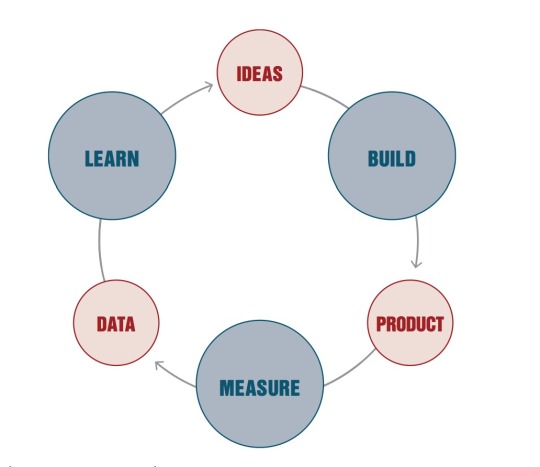
ries believes that most successful startups aren’t the ones that land on a good idea and execute it perfectly. of course those exist but building a strategy with “get lucky” as the cornerstone is a terrible idea. ries believes that most startups are ones that iterate the fastest through the build-measure-learn loop.
i have a theory that the same is true for successful people. setting up and iterating through the build-measure-learn loop for your life not only helps you make progress in the right direction, it helps you make progress faster over time. this happens most meaningfully in the context of a long-term life vision, but i think progress is still possible without that vision.*
the process works like this:
say, for example, you want to iterate through the loop regarding how you think about your diet once a week. by setting up weekly experiments regarding things in your life, you build in systems for learning. of course there will be weeks where you move in the “wrong” direction (i.e. you try something that turns out bad for you), but even that info is useful for learning.
over time, the data you gather should help you learn, over time, how to make better decisions. example: i found that when i don’t drink coffee after 11am, i sleep better. that learning helped me structure future experiments: do i sleep even better when i only drink coffee m-f instead of seven days a week? (spoiler: the answer is yes).
then, when you start to make longer-term reflections (example: weeks 1-10), hopefully you’ll find that the subsequent experiments lead you you to make progress in the “right” direction faster. in the visual above, from unit 0-10, there was no net progress, but from 10-20, there was a lot. that learning is built on the 0-10 lessons.
the pithole that many of us fall into is that we go into jobs, careers, colleges, relationships, etc. with the (often implicit and sub-conscious) idea that we’re just going to pick right the first time. again, it’s possible for that to happen (and some companies get big this way – by just finding and executing on a good idea at the right time), but expecting to get lucky isn’t a real strategy.
“life is really just about shitty models and their error correction.” — spencer wilson
* i’m not sure that iterating through the loop can help set high-level direction. in fact, i think it can’t because desired values may not show up in day-to-day actions. that will result in, at best, local optimization, and not global optimization. that said, i could be wrong.
during a recent catch up session with my good friend, kate, we somehow got on the topic of work partners. as she was explaining how she realized the value of having a great work partner (particularly as they expanded their team over the summer), i realized i think i’ve been gifted the same type of partnership.
as we went back and forth, we discussed some of the attributes we’ve noticed in our work partners that make the partnerships great:
different, but complementary perspectives
experiences shape who we are. working with someone who has the exact same experiences is boring. however, working with someone who has no similar experiences is unbearably tough because you have to explain everything all the time. working with someone who has enough experiences to have a different worldview and yet understand your perspective is a huge benefit to a partnership.
don’t sweep hard conversations under the rug
working with someone with whom you can passionately disagree, talk it out, and then keep moving forward is incredible. it allows you both the freedom to be honest. being honest keeps people feeling good (because being dishonest has negative impacts on the self over time []) while also preventing resentment.
it’s easy (joyful even) to work together
the above points contribute to making it easy to work together but there’s more than that. there’s something magically about finding someone who’s skills complement your own. it’s also great when the communication pathways in the partnership flow freely, as well as the ability to pass work back and forth. kate and i have expressed and heard our work partners express the sentiment that working without our partner is just less fun.
honestly, finding a good work partner seems just as rare as finding a good life partner. definitely feels like something to hold onto.
thrice over the last few months have i had deep conversations about altruism. most often i talk about this with ross, once i went to a dinner salon (sup, big talk!), and last night with my friend kate (founder of department of play).
i always found myself resisting the term. slowly, i’ve come to realize why.
but first, the definition:
al·tru·ism, /ˈaltro͞oˌizəm/ (noun): the belief in or practice of disinterested and selfless concern for the well-being of others.
it sounds good on its surface so why do i resist the idea? i’m coming to see that altruism relies on a strong distinction between ‘self’ and ‘other.’ in order to be altruistic, you have to genuinely believe that someone else is so disconnected/different from you that it’s possible to do something that benefits them completely and you none. such a strong notion of other i think actually undermines deep empathy and collective action.
western societies rely heavily on the process of othering for survival (there’s a whole journal on this phenomenon and how to reverse it). few of them would actually exist in their current forms did they not. we would act differently towards people and the planet if we realized more deeply that we’re all intimately connected AND that our survival is linked to the survival of others.
so being altruistic requires a disbelief in the idea that doing what’s good for someone you don’t know or are not like is inherently good for you.
now that i’m writing, i realize there are more points to make before i can logically arrive at my conclusion, but the conclusion is this: whether or not altruism has ever legitimately existed in the past, we can no longer afford it today. we have to start (and fast) living and making decisions like what’s good for others is good for me. i think this is the evolution (or true nature?!) of self-interest. gotta write more… but not now.
and now, some quotes:
“In a real sense all life is inter-related. All men are caught in an inescapable network of mutuality, tied in a single garment of destiny. Whatever affects one directly, affects all indirectly… This is the inter-related structure of reality.” — dr. martin luther king, jr., letter from a birmingham jail
“… we set ourselves against ourselves and become like Ouroboros, the misguided snake, who tries to eat his own tail. Ouroboros is the perennial symbol of all vicious circles, of every attempt to split our being asunder and make one part conquer the other.” — alan watts, the wisdom of insecurity
ps - one question i can’t seem to answer is: is it a privilege to be able to believe in altruism?
pps - from wiki: “Much debate exists as to whether “true”altruism is possible in human psychology.”
what i’ve been doing is taking the build-measure-learn model from ries and using it in meg jay’s philosophy.
in the defining decade, jay discusses how most people are crippled by the inability to decide “what they want to do with their life.” this leads to them just doing whatever comes along (drifting) or, worse, actually making decisions that are counter to their well-being.
to make matters worse, many people in my generation are taught (falsely) to believe that they can do anything. her antidote is basically a reality check. no one is actually able to do anything (and definitely not everything). in fact, if each of us took an honest look at our skillsets and our experiences, there are probably only 5-6 areas in which we could meaningfully work in a way that provides enough resources to live while also aligning with an interest or natural ability.
this could be seen as limiting, but it’s actually quite freeing because it means you have somewhere to start.
so then the problem becomes how to figure out what to do from your list of realistic pathways. that’s where the build-measure-learn loop comes in.
ries believes that successful startups in the long run aren’t the ones that execute brilliant ideas. he sees that success is determined by the ability to learn and implement lessons from that learning faster than anyone else in your space. that’s a bit of an oversimplification, but that definitely resonates with me.
the trick, then, to figuring out what to do with your life is to set up as many ways as possible to learn. this thinking can apply to every area of life. work, love, family, place to live, etc.
part 2 coming soon: how iterating through the build-measure-learn loop helps you make more progress faster over time…
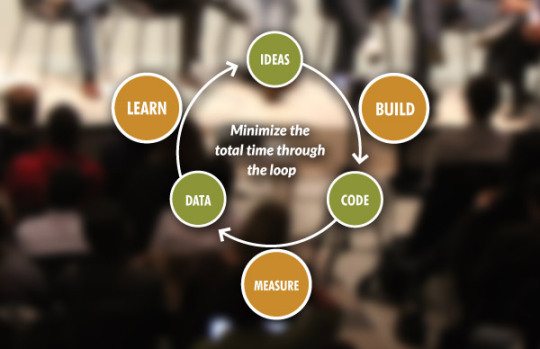
ps - i think ries pivoted away from the original build-measure-learn loop (above) to the one below. the original one is more relevant to this context.