book review: waking the tiger by peter levine
05 Apr 2026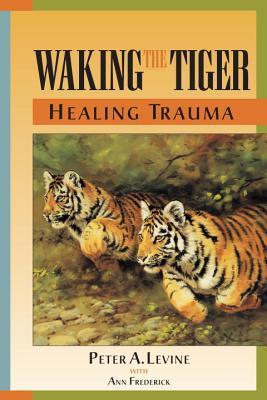
Waking the Tiger: Healing Trauma by Peter A. Levine
What are the main ideas?
- the body knows how to heal trauma if we let it
- our 3 brains (reptilian/instinctual, mammalian/limbic/emotional, and human/rational), when working together in concert, want to heal and it’s when they are misaligned that we don’t (aka become traumatized). other animals tend to trauma more easefully because it’s harder for their reptilian brains to be out of alignment with the others. our rational brains can get in the way of the lower two brains doing their thing which is naturally tends towards healing. if we can learn to work with our human brain alongside the other two, healing is a process that wants to come forth and can.
- developmental trauma is largely psychological and arises from prolonged processes. shock trauma is the result of an isolated (or series of) events.
- when exposed to something difficult, the body generates energy. if that energy is discharged, trauma doesn’t occur. if something blocks the energy from discharging, we become traumatized. healing trauma is largely about learning how to work with the energy generated from a potentially traumatic event so that it doesn’t get stuck (or if it’s already stuck, creating the conditions for it to release)
- “trauma represents animal instincts gone awry.”
- sometimes, the search for a story of what happened in the past that causes a trauma can get in the way of discharging the stuck energy that would actually lead to healing.
- conscious awareness of and working with the body’s sensations (the felt sense) can be a doorway to healing trauma.
- animals discharge the energy generated by difficult experiences by moving their bodies. humans can do the same but we often stop ourselves because of our rational minds.
- when trauma has occurred, we can get stuck in our orienting response (which is what attunes the body to threat and helps us decide what to do in response)
- if in response to a threat, we have determined that fleeing or freezing aren’t enough of a response to thwart the danger, we freeze. after the danger has passed, our bodies want to discharge the energy. but if we don’t do that successfully, the energy gets stuck via our immobility response. the immobility itself isn’t bad; sometimes it’s truly the best choice. the trouble is that if we lose the ability to determine when freezing is best or the other options are best, we enter into cycles that can seem to never end and prevent us from returning to normal states. over time, repeated generation of energy from possible threat and then freezing can cause cumulative effects (PTSD)
- with skill, we can learn to use the energy or possible threat to re-enter the moments of past threats, and then bring new resources from our current self to surface and allow old energy to move. this often happens rhythmically, moving between old stuck energy and new resourced energy.
- the 4 steps of the traumatic reaction are
- hyperarousal
- constriction
- dissociation
- freezing/immobility
- traumatic re-enactment (mostly unhelpful) is where we recreate the difficult situation that created a past trauma. traumatic re-negotiation is where we re-open a past traumatic situation and bring new energy to it to allow the energy to move through the body. to the unskillful practitioner, they can appear similar, but one the former typically just cycles indefinitely and the latter can help heal.
- as the healing occurs, excitement, increased aliveness, and creativity (even joy) return where there once was helplessness and overwhelm.
- the process of moving through traumatic renegotiation is not easy but, with support (internal or external), it can bring a body back into its original states of power.
If I implemented one idea from this book right now, which one would it be?
practice bringing resources from someone’s current to the past rhythmically. it’s in the oscillation between old energy and new energy that trauma can gradually unstick.
How would I describe the book to a friend?
this book is a gold mine for anyone looking to understand some of the nitty gritty of how trauma happens and how it can be released (at least in a watern cultural context). it’s not a very long text, but it’s packed with great wisdom and stories and practices. not for the feint of heart. but if you’re looking to up your healing game (or even just your awareness of what trauma is and how it forms), i highly highly recommend this! levine presents lots of intricate details and terms and processes and tbh i’m probably going to be figuring out how they all relate for a while.
ps - there are plenty of exercises and practicing them is key! often, i skip all these types of activities or go back and do them later. not this time. do it all and as you read.
words / writing / post-processing
797w / 31min / 9min